
IFPH Consultation
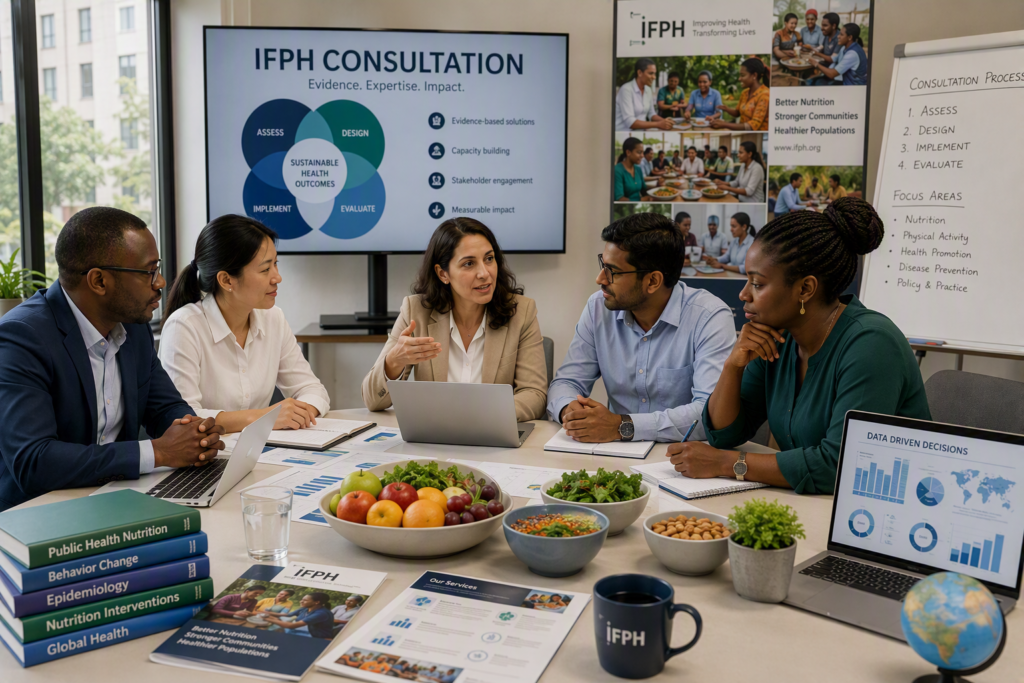
IFPH works with clients to identify problems and solve them, using a structured and creative approach. What IFPH does depends on the situation and on what the client needs: it can mean one-off advice on a specific issue, the design of a full intervention, or the evaluation and revision of systems the client already runs.
Once the scope of a project is agreed, a team of specialist consultants begins working with the client’s staff. Together they gather and analyse data to find practical solutions. After both sides agree on the interventions, the consultants train the client’s staff, support implementation, and help the client achieve lasting results.
IFPH’s consulting covers a wide range of areas:
- Healthy eating and lifestyle
- Precision Health and Personalised Nutrition
- Balanced diets for school-meal programmes
- Applying the ten core skills set out in the National Occupational Standards for public health
- Physical activity in public health
- Population and individual behaviour-change models of health promotion
- Intervention strategies for health promotion and disease prevention
- Public health nutrition strategies for intervention at the environmental level
- Public health nutrition strategies for intervention at the individual level
- Behaviour-change models that do not rely on providing food
- New and emerging diseases and pandemics affecting populations.
- Nutrition for Mental Health and Neurodevelopmental diseases [ADHD, Autism]
- Public health and the burden of major non-communicable diseases
- Public health interventions for cardiovascular disease and high-risk populations
- Public health interventions for diabetes mellitus (prevention and management)
- Public health interventions for stroke
- Public health interventions for obesity
- Public health interventions for cancer (prevention guidelines for individuals and populations)
- Public health interventions for osteoporosis
- Applied clinical and public health nutrition
- Eating disorders: clinical science and treatment
- Fad slimming diets: advantages and disadvantages
- Food allergy, intolerance, and the immune system
- Food and mood
- Practical nutrition assessment in clinical and field settings
- International public health nutrition
- Vitamin A deficiency: dietary diversification, fortification, and supplementation
- Iodine and iodine-deficiency disorders: assessment and intervention
- Iron-deficiency anaemia: intervention and management
- Public health and the burden of major communicable diseases
- Public health and the control of infectious diseases (for example, HIV/AIDS, TB, STIs, and parasitic infections)
- Public health and foodborne illness
- Public health and the emergence of novel communicable diseases
- Outpatient care and support services for conditions such as cancer cachexia, HIV/AIDS, and STIs
- Food-safety modernisation from farm to table
- Key policy and practice issues in promoting public health, from local and community levels to international settings
- The impact of globalisation on public health in higher- and lower-income countries
- Health benefits of nutraceuticals, functional foods, and phytochemicals
- CRISPR-Cas9, Genetically engineered food and climate change
- Behavioural Disorders: Alcohol, tobacco/Smoking and psychoactive substances, Nutrition and the Brain: mental and psychological disorders