
Diabetes Mellitus: Definition, Global Burden, and the Emerging Role of Personalised Nutrition and Precision Medicine
Synopsis
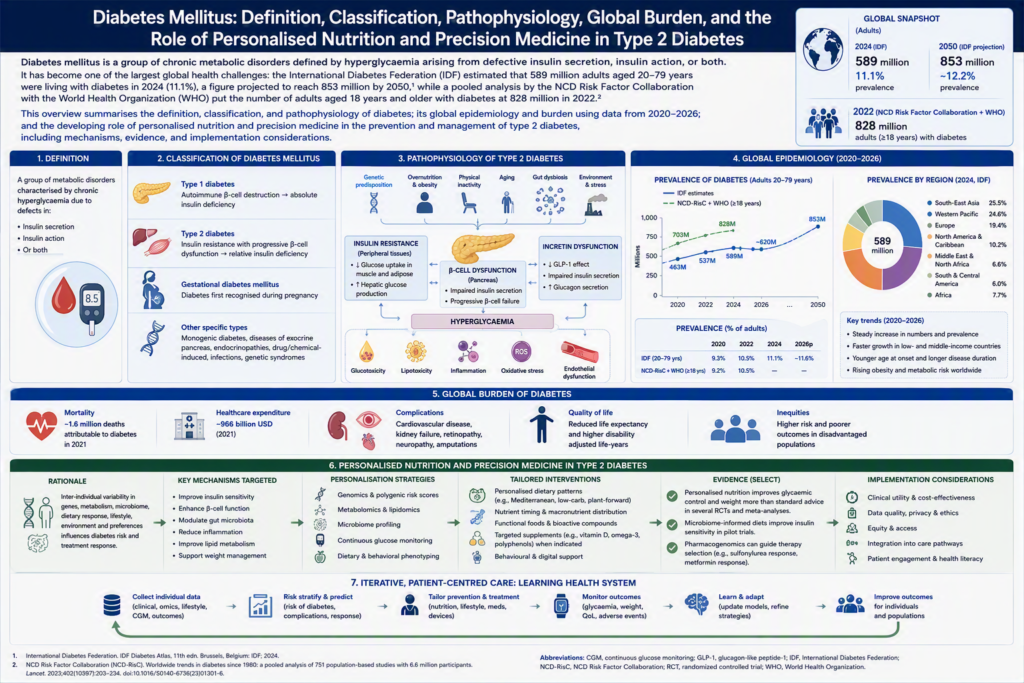
Diabetes mellitus is a group of chronic metabolic disorders defined by hyperglycaemia arising from defective insulin secretion, insulin action, or both. It has become one of the largest global health challenges: the International Diabetes Federation (IDF) estimated that 589 million adults aged 20–79 years were living with diabetes in 2024 (11.1%), a figure projected to reach 853 million by 2050,1 while a pooled analysis by the NCD Risk Factor Collaboration with the World Health Organization (WHO) put the number of adults aged 18 years and older with diabetes at 828 million in 2022.2 This overview summarises the definition, classification, and pathophysiology of diabetes; its global epidemiology and burden using data from 2020–2026; and the developing role of personalised nutrition and precision medicine in the prevention and management of type 2 diabetes, including mechanisms, evidence, and implementation considerations.
1. Definition, classification, and pathophysiology
1.1 Definition and diagnosis
Diabetes mellitus is a group of metabolic disorders of carbohydrate metabolism in which glucose is both underused as an energy source and overproduced, resulting in chronic hyperglycaemia.3 Sustained hyperglycaemia damages blood vessels and nerves, producing the characteristic microvascular complications (retinopathy, nephropathy, and neuropathy) and macrovascular complications (coronary, cerebrovascular, and peripheral arterial disease). Diabetes is diagnosed from raised venous plasma glucose or glycated haemoglobin (HbA1c), using the thresholds in Table 1.3,4
Table 1. Diagnostic thresholds for diabetes and intermediate hyperglycaemia (ADA/WHO).
| Test | Normal | Intermediate hyperglycaemia | Diabetes |
| Fasting plasma glucose | <5.6 mmol/L (<100 mg/dL) | IFG 5.6–6.9 mmol/L (100–125 mg/dL)* | ≥7.0 mmol/L (≥126 mg/dL) |
| 2-h plasma glucose (75 g OGTT) | <7.8 mmol/L (<140 mg/dL) | IGT 7.8–11.0 mmol/L (140–199 mg/dL) | ≥11.1 mmol/L (≥200 mg/dL) |
| HbA1c | <5.7% (<39 mmol/mol) | 5.7–6.4% (39–46 mmol/mol) | ≥6.5% (≥48 mmol/mol) |
| Random plasma glucose | — | — | ≥11.1 mmol/L (≥200 mg/dL) with symptoms |
IFG, impaired fasting glucose; IGT, impaired glucose tolerance; OGTT, oral glucose tolerance test. *The ADA defines IFG as 5.6–6.9 mmol/L; the WHO uses 6.1–6.9 mmol/L. In the absence of unequivocal hyperglycaemia, a diagnosis should be confirmed by repeat testing.
1.2 Classification
Diabetes is conventionally classified into four categories: type 1 diabetes, type 2 diabetes, gestational diabetes, and other specific types (Table 2).3,4 The categories differ in cause, typical age of onset, and treatment, although overlap and misclassification are common in practice, and adult-onset diabetes is increasingly recognised as biologically heterogeneous (Section 3). Type 1 diabetes results from immune-mediated beta-cell destruction and absolute insulin deficiency; the IDF estimated that more than 9.5 million people were living with type 1 diabetes in 2024, including 1.9 million under 20 years.1Type 2 diabetes, more than 90% of all cases, arises from insulin resistance with progressive beta-cell dysfunction and is closely linked to adiposity, inactivity, diet, ageing, and genetic susceptibility.1 Gestational diabetes, part of the hyperglycaemia in pregnancy that affects about one in five pregnancies,1 and the other specific types (including monogenic and secondary diabetes) complete the classification.3
Table 2. Classification of diabetes mellitus with defining features.
| Type | Mechanism | Typical onset | Share | Markers / diagnosis | First-line management |
| Type 1 | Autoimmune beta-cell destruction; absolute insulin deficiency | Often childhood or adolescence; any age | Minority (>9.5M people; 1.9M under 20) | Islet autoantibodies (GAD, IA-2, ZnT8) | Insulin (lifelong) |
| Type 2 | Insulin resistance with progressive beta-cell dysfunction | Usually adulthood; increasingly younger | >90% of all diabetes | None specific; linked to adiposity | Lifestyle, metformin, other agents |
| Gestational | Insulin resistance of pregnancy exceeding beta-cell reserve | Detected during pregnancy | ~1 in 5 pregnancies (hyperglycaemia in pregnancy) | OGTT in pregnancy | Diet and lifestyle; insulin if needed |
| Other specific | Monogenic (MODY, neonatal), pancreatic disease, endocrine, drug-induced | Variable | Uncommon | Genetic testing for monogenic forms | Depends on cause (e.g. sulfonylureas for HNF1A MODY) |
1.3 Pathophysiology
In type 1 diabetes, autoimmune loss of beta cells removes the capacity to produce insulin, so that without replacement, glucose cannot enter insulin-dependent tissues and lipolysis proceeds unchecked, predisposing to ketoacidosis. In type 2 diabetes, peripheral tissues become resistant to insulin while beta cells initially compensate; hyperglycaemia emerges when secretion can no longer match demand, and beta-cell function then declines progressively (Figure 1). Contributing mechanisms include ectopic fat in the liver and pancreas, chronic low-grade inflammation, and impaired incretin signalling. Gestational diabetes reflects insulin resistance of pregnancy that exceeds the maternal beta-cell reserve.
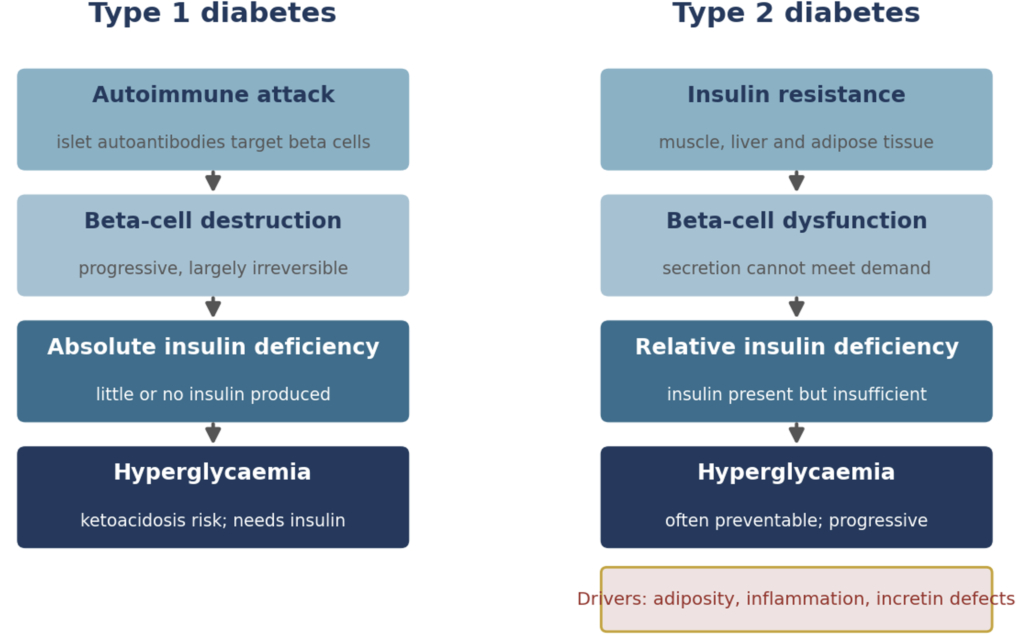
Figure 1. Contrasting pathophysiology of type 1 diabetes (autoimmune, absolute insulin deficiency) and type 2 diabetes (insulin resistance with progressive beta-cell dysfunction).
2. Global epidemiology and burden
Diabetes is a large and growing public health problem. The IDF Diabetes Atlas (11th edition) estimated that 589 million adults aged 20–79 years, about 11.1% or nearly one in nine, were living with diabetes in 2024, and projected a rise to 853 million (roughly one in eight) by 2050, a 45% increase that far outpaces population growth (Figure 2).1 More than 90% of these cases are type 2 diabetes; an estimated 252 million adults with diabetes (43%) are undiagnosed; and about four in five (81%) live in low- and middle-income countries (LMICs).1
A further large population is at high risk: 635 million adults had impaired glucose tolerance, and 488 million had impaired fasting glucose in 2024. Diabetes was linked to about 3.4 million deaths and to global health expenditure exceeding US$1 trillion, a 338% rise over 17 years.1 An independent analysis by the NCD Risk Factor Collaboration with WHO estimated 828 million adults aged 18 and older with diabetes in 2022, up 630 million since 1990, with 445 million (59% of those aged 30 and over) untreated.2 The two headline totals differ (828 million versus 589 million) because of different age ranges, case definitions, and methods; both point to a rising burden concentrated in poorer countries.1,2
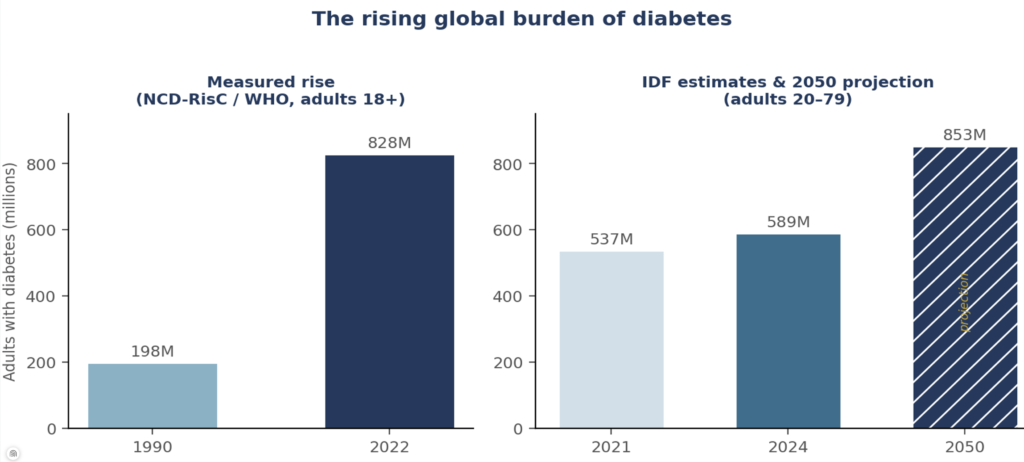
Figure 2. The rising global number of adults with diabetes: measured trend (NCD-RisC/WHO, adults 18+) and IDF estimates with the 2050 projection (adults 20–79).
The burden is unevenly distributed across the seven IDF regions, and the largest relative increases to 2050 are projected in Africa and the Middle East and North Africa (Table 3).1
Table 3. Global and regional prevalence of diabetes (adults 20–79), 2024 and 2050 projections.
| IDF region | 2024 (millions) | 2050 (millions) | Increase |
| Western Pacific | 215.4 | 253.8 | +18% |
| South-East Asia | 106.9 | 184.5 | +73% |
| Middle East & North Africa | 84.7 | 162.6 | +92% |
| Europe | 65.6 | 72.4 | +10% |
| North America & Caribbean | 56.2 | 68.1 | +21% |
| South & Central America | 35.4 | 51.5 | +45% |
| Africa | 24.6 | 59.5 | +142% |
| World | 588.7 | 852.5 | +45% |
3. Personalised nutrition and precision medicine in type 2 diabetes
3.1 Rationale and mechanisms
Type 2 diabetes is heterogeneous in its causes, presentation, rate of progression, complication risk, and response to treatment. Precision medicine seeks to use this heterogeneity, matching the right intervention to the right person at the right time, and the second international consensus report of the ADA/EASD Precision Medicine in Diabetes Initiative reviewed its four pillars, prevention, diagnosis, treatment, and prognosis, across the recognised forms of diabetes (Figure 3).5,6
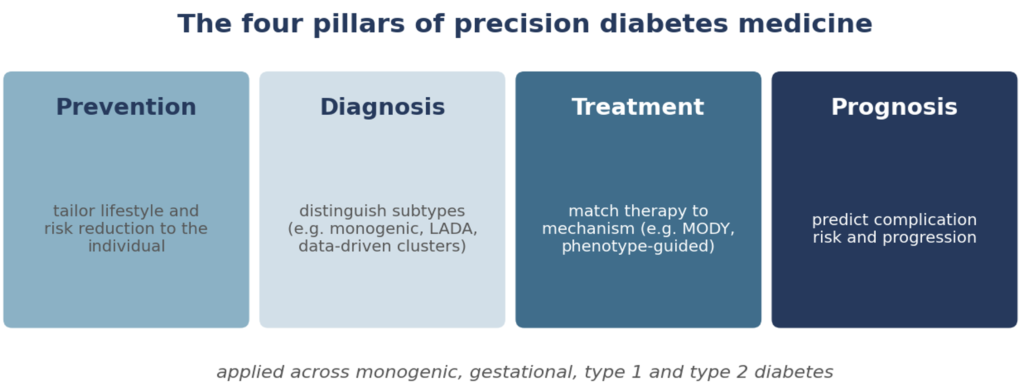
Figure 3. The four pillars of precision diabetes medicine are applied across monogenic, gestational, type 1 and type 2 diabetes.
Two lines of evidence illustrate the biological heterogeneity. Data-driven cluster analyses of adult-onset diabetes have identified reproducible subgroups that differ in complication risk and progression,7 and pathophysiology-based subphenotyping can distinguish people at high risk before diabetes develops.8 A systematic review confirmed that such subclassification is reproducible but that its clinical actionability is still limited.9 The clearest success is monogenic diabetes, where a genetic diagnosis directly changes management. Personalised nutrition rests on a parallel observation: people vary widely in their metabolic response to the same foods, and machine-learning models can predict an individual’s response better than generic rules.10,11
3.2 Evidence in prevention
At the population and high-risk level, lifestyle intervention is highly effective: the Diabetes Prevention Program reduced the incidence of type 2 diabetes by 58% in adults with impaired glucose tolerance.13 The precision question is whether tailoring prevention to the individual improves on this; a systematic review found that individual and environmental factors do modify the response to dietary and lifestyle interventions, but that the evidence to target prevention precisely is still developing.12
3.3 Evidence in management and remission
Weight-centred management can drive type 2 diabetes into remission. In the DiRECT trial, a primary-care weight-management programme achieved remission in about 46% of participants at one year, with just over a third sustaining remission at two years; remission was closely related to the amount of weight lost.14,15 This is, in effect, mechanism-based stratified care. Diets personalised to blunt the post-meal glucose rise show promise for glycaemic control, though their advantage over standard advice for outcomes such as weight and HbA1c has been inconsistent (Table 4).10,11
Table 4. Selected evidence on personalised nutrition and precision medicine in type 2 diabetes.
| Study | Design and population | Key finding |
| Zeevi 2015 | ML model with microbiome and clinical data (n≈800) | Individualised prediction of glycaemic response outperformed generic dietary advice |
| PREDICT 1 (Berry 2020) | n=1,002 adults; standardised test meals | Large person-to-person variation in glucose (68%) and triglyceride (103%) responses to identical meals |
| Ahlqvist 2018 | Cluster analysis of adult-onset diabetes | Five reproducible subgroups with differing complication risk and progression |
| Wagner 2021 | Subphenotyping of people at elevated risk | Pathophysiology-based subphenotypes identifiable before diabetes onset |
| DPP (Knowler 2002) | RCT; adults with impaired glucose tolerance | Intensive lifestyle cut incidence of type 2 diabetes by 58% |
| DiRECT (Lean 2018–2019) | RCT; primary-care weight management | Remission in ~46% at 1 year and ~36% at 2 years, closely tied to weight lost |
3.4 Implementation considerations
Translating precision approaches into public health practice raises distinct challenges. Much of the evidence still needs external validation before it can guide routine care,5,9 and the tools involved (multi-omic profiling, continuous glucose monitoring, and data analytics) carry real costs and require workforce capacity and data infrastructure. The most serious risk is inequity: because 81% of the diabetes burden falls in LMICs,1 precision tools available only in high-income settings could widen existing disparities.
An implementation-science lens is therefore essential, attending to reach, adoption, fidelity, cost, and scalability. The most credible model is not precision instead of population prevention but precision within it: strong population-level measures to prevent type 2 diabetes, with stratified and personalised strategies layered on for those who need them (Figure 4). For the nutrition and public health workforce, the near-term task is to translate emerging precision-nutrition science into feasible, affordable, and culturally appropriate advice, and to build the evidence on what works, for whom, and at what cost.
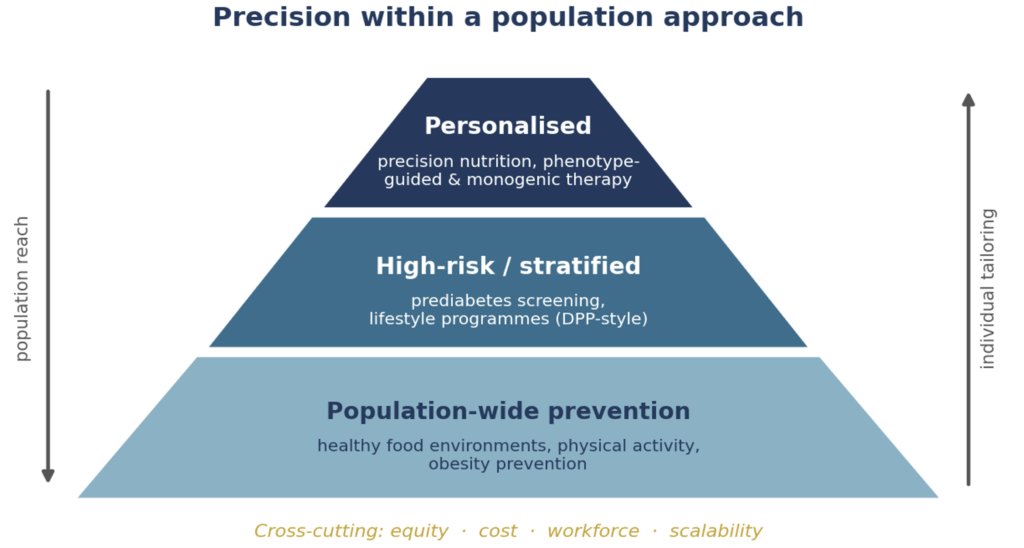
Figure 4. Precision within a population approach: personalised and stratified strategies layered on a foundation of population-wide prevention.
4. Remember!
Diabetes, overwhelmingly type 2 and increasingly concentrated in low- and middle-income countries, is among the defining public health challenges of the coming decades, with hundreds of millions affected and a wide treatment gap.1,2 Precision medicine and personalised nutrition offer a route to more effective, individualised prevention and care; monogenic diabetes and weight-based remission already show the principle in action, while most precision-nutrition applications remain at an emerging stage.5,14 Their ultimate public health value will depend not on the science alone but on equity, affordability, and careful implementation alongside strong population-level prevention.12
References
1. Magliano DJ, Boyko EJ; IDF Diabetes Atlas 11th edition scientific committee. IDF Diabetes Atlas. 11th ed. Brussels: International Diabetes Federation; 2025.
2. NCD Risk Factor Collaboration (NCD-RisC). Worldwide trends in diabetes prevalence and treatment from 1990 to 2022: a pooled analysis of 1108 population-representative studies with 141 million participants. Lancet. 2024;404(10467):2077–93.
3. American Diabetes Association Professional Practice Committee. 2. Diagnosis and classification of diabetes: Standards of Care in Diabetes—2025. Diabetes Care. 2025;48(Suppl 1):S27–49.
4. World Health Organization. Classification of diabetes mellitus. Geneva: World Health Organization; 2019.
5. Tobias DK, Merino J, Ahmad A, Aiken C, Benham JL, Bodhini D, et al. Second international consensus report on gaps and opportunities for the clinical translation of precision diabetes medicine. Nat Med. 2023;29(10):2438–57.
6. Nolan JJ, Kahkoska AR, Semnani-Azad Z, Hivert MF, Ji L, Mohan V, et al. ADA/EASD precision medicine in diabetes initiative: an international perspective and future vision for precision medicine in diabetes. Diabetes Care. 2022;45(2):261–6.
7. Ahlqvist E, Storm P, Käräjämäki A, Martinell M, Dorkhan M, Carlsson A, et al. Novel subgroups of adult-onset diabetes and their association with outcomes: a data-driven cluster analysis of six variables. Lancet Diabetes Endocrinol. 2018;6(5):361–69.
8. Wagner R, Heni M, Tabák AG, Machann J, Schick F, Randrianarisoa E, et al. Pathophysiology-based subphenotyping of individuals at elevated risk for type 2 diabetes. Nat Med. 2021;27(1):49–57.
9. Misra S, Wagner R, Ozkan B, Schön M, Sevilla-Gonzalez M, Prystupa K, et al. Precision subclassification of type 2 diabetes: a systematic review. Commun Med (Lond). 2023;3:138.
10. Zeevi D, Korem T, Zmora N, Israeli D, Rothschild D, Weinberger A, et al. Personalized nutrition by prediction of glycemic responses. Cell. 2015;163(5):1079–94.
11. Berry SE, Valdes AM, Drew DA, Asnicar F, Mazidi M, Wolf J, et al. Human postprandial responses to food and potential for precision nutrition. Nat Med. 2020;26(6):964–73.
12. Bodhini D, Morton RW, Santhakumar V, Nakabuye M, Pomares-Millan H, Clemmensen C, et al. Impact of individual and environmental factors on dietary or lifestyle interventions to prevent type 2 diabetes development: a systematic review. Commun Med (Lond). 2023;3:133.
13. Knowler WC, Barrett-Connor E, Fowler SE, Hamman RF, Lachin JM, Walker EA, et al; Diabetes Prevention Program Research Group. Reduction in the incidence of type 2 diabetes with lifestyle intervention or metformin. N Engl J Med. 2002;346(6):393–403.
14. Lean ME, Leslie WS, Barnes AC, Brosnahan N, Thom G, McCombie L, et al. Primary care-led weight management for remission of type 2 diabetes (DiRECT): an open-label, cluster-randomised trial. Lancet. 2018;391(10120):541–51.
15. Lean MEJ, Leslie WS, Barnes AC, Brosnahan N, Thom G, McCombie L, et al. Durability of a primary care-led weight-management intervention for remission of type 2 diabetes: 2-year results of the DiRECT open-label, cluster-randomised trial. Lancet Diabetes Endocrinol. 2019;7(5):344–55.