
Global Obesity as a Public Health Challenge: From Population Prevention to Personalised Nutrition and Precision Medicine
Synopsis
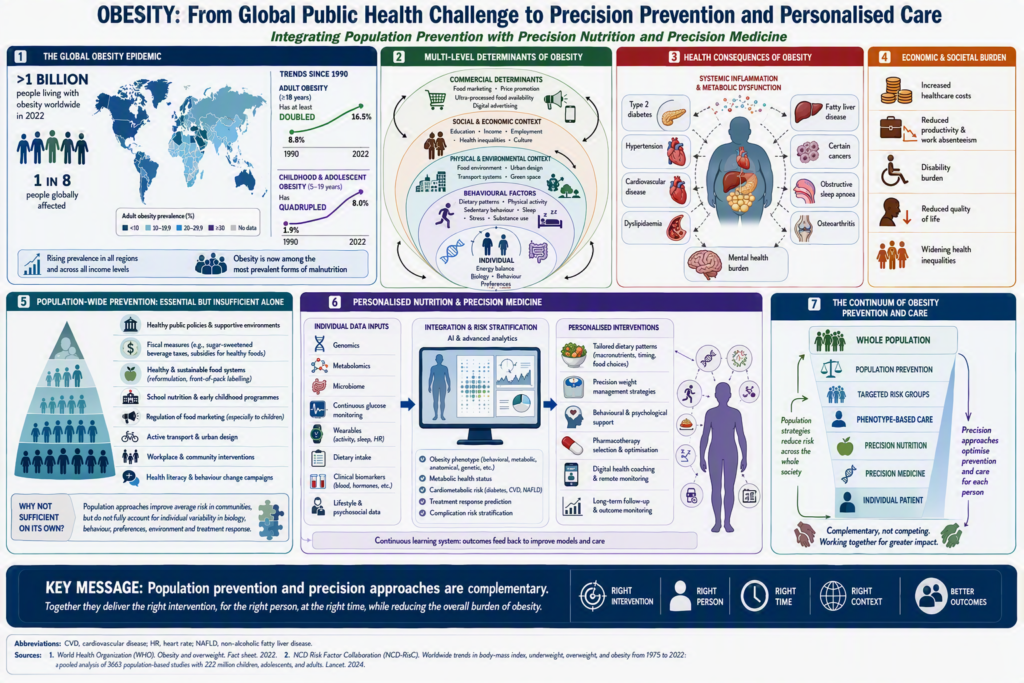
Obesity has become one of the defining public health challenges of the twenty-first century. In 2022, more than one billion people were living with obesity worldwide, and adult obesity had at least doubled since 1990 while obesity among children and adolescents had quadrupled.1,2 This review restates the global scale of the problem, its multi-level determinants, and its health and economic consequences, before examining why population-wide prevention, though essential, is not sufficient on its own. It then considers the growing evidence for personalised nutrition and precision medicine, which use an individual’s biology, behaviour, and environment to tailor dietary and therapeutic strategies. We argue that precision approaches should complement, rather than replace, population prevention, forming a continuum from the whole population to the individual.
1. Introduction
The prevalence and severity of obesity have risen sharply across the world, and the World Health Organization (WHO) now classifies obesity as a chronic, relapsing disease that arises from complex interactions between genetics, neurobiology, eating behaviour, the food environment, and wider market and societal forces.2 Obesity is a major risk factor for premature illness and death and is closely linked with type 2 diabetes, hypertension, dyslipidaemia, atherosclerosis, and cardiovascular disease. Because excess adiposity in childhood tends to persist into adult life, obesity is also a life-course problem that begins early and compounds over time.4
2. The global scale of obesity
Quantifying the problem matters for three reasons: to establish prevalence in different regions, to monitor trends over time, and to judge whether interventions work. The most recent global analysis, pooling 3,663 population-based studies and 222 million participants, found that more than one billion people were living with obesity in 2022.1 WHO estimates that 2.5 billion adults were overweight in 2022, of whom 890 million were living with obesity, corresponding to 43% and 16% of adults respectively.2 Among children and adolescents aged 5 to 19 years, obesity rose from 2% in 1990 to 8% in 2022. Prevalence varies widely by region, from around 31% overweight in the WHO South-East Asia and African regions to 67% in the Americas, and it is now rising fastest in many low- and middle-income countries.2
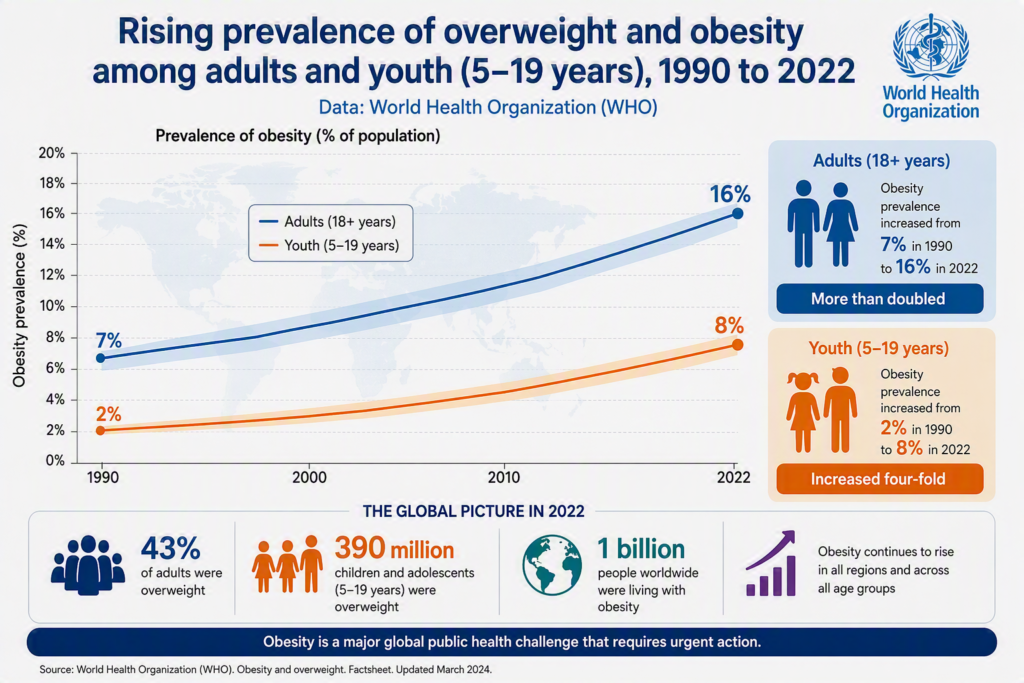
Figure 1. Rising prevalence of overweight and obesity among adults and youth (5–19 years), 1990 to 2022. Data: WHO.
Table 1 summarises the current global burden. Left unchecked, the trajectory is projected to worsen: the World Obesity Federation estimates that the number of adults living with obesity will rise from about 524 million in 2010 to some 1.13 billion by 2030, that around 1.6 million premature deaths from non-communicable diseases are attributable to overweight and obesity each year, and that only about 7% of countries have health systems adequately prepared to respond.3
Table 1. Current global burden of overweight and obesity.
| Indicator (2022 unless noted) | Estimate |
| Adults (18+) living with overweight | 2.5 billion (43%) |
| Adults (18+) living with obesity | 890 million (16%) |
| People of all ages living with obesity | More than 1 billion |
| Children/adolescents 5–19 with overweight | Over 390 million (20%) |
| Children/adolescents 5–19 with obesity | 160 million (8%) |
| Children under 5 with overweight (2024) | 35 million |
| Change since 1990 | Adult obesity doubled; youth obesity quadrupled |
3. Determinants: beyond genetics
Rising obesity cannot be attributed to genetics alone. Fewer than 1% of childhood obesity cases stem from a single-gene disorder; for the large majority, environment and behaviour drive risk, acting on an inherited susceptibility. Many school-age children now spend most of their waking hours sitting, at home, at school, and in front of screens, within a food environment rich in palatable, energy-dense products promoted by sophisticated marketing. Large portions of convenient, ready-made food high in fat, salt, and sugar make excess energy intake easy.
These influences operate at several levels at once, from individual biology and household habits to the community food environment and the wider economic, commercial, and policy context (Figure 2). Because the drivers are layered, effective responses must also work at more than one level.
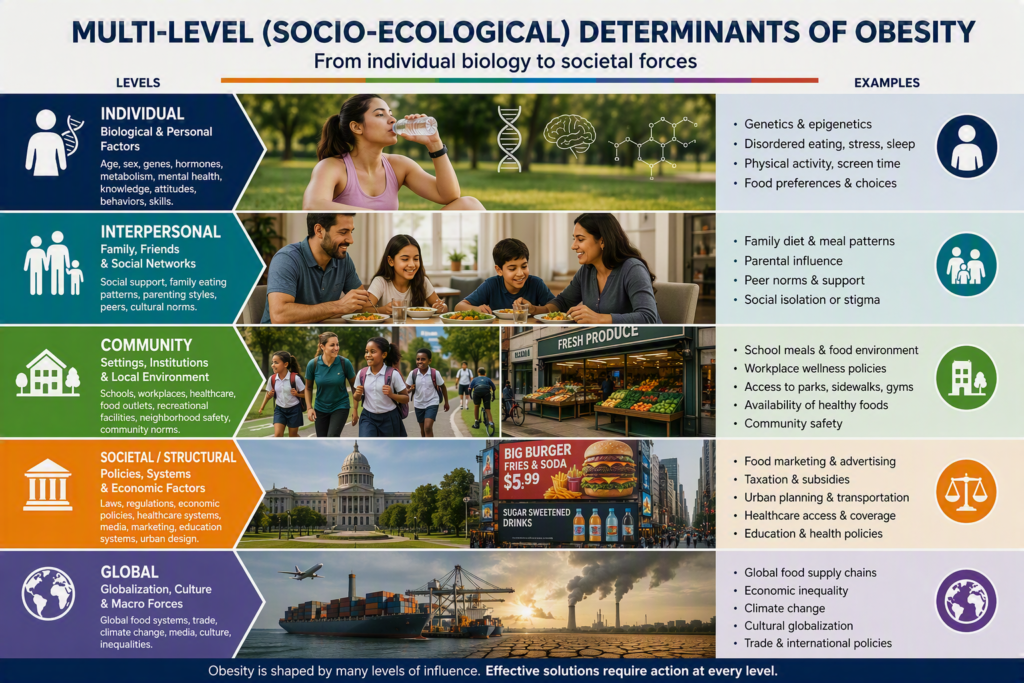
Figure 2. Multi-level (socio-ecological) determinants of obesity, from individual biology to societal forces.
4. Health and economic consequences
Obesity raises the risk of a broad range of conditions across almost every organ system (Table 2). It is also strongly linked to psychosocial harm, including weight stigma. In children, obesity carries both immediate physical and psychosocial effects and a raised risk of adult obesity: a systematic review and meta-analysis found that around four in five adolescents with obesity remained obese in adulthood.4 The economic burden is correspondingly large; the World Obesity Federation has projected that the global cost of overweight and obesity could reach roughly US$4 trillion, about 3% of global GDP, by 2035 if current trends continue.3
Table 2. Major obesity-related conditions by body system.
| System | Associated conditions |
| Cardiovascular | Hypertension, dyslipidaemia, atherosclerosis, coronary heart disease, stroke, heart failure |
| Metabolic | Type 2 diabetes, insulin resistance, metabolic syndrome |
| Hepatic & renal | Metabolic dysfunction-associated steatotic liver disease, chronic kidney disease |
| Respiratory & mechanical | Obstructive sleep apnoea, osteoarthritis, reduced mobility |
| Oncological | Increased risk of several cancers (including colorectal, breast, endometrial) |
| Psychosocial | Depression, anxiety, weight stigma, reduced quality of life |
5. Health behaviour change and population prevention
Over recent decades, interest has grown in preventing overweight through changes in individual behaviour, such as dietary change and increased physical activity, and the field of behavioural medicine has developed structured methods that are more effective than traditional health education alone. Health education, communication, and promotion remain valuable public health interventions. Population-level dietary guidance (Table 3) is well established and underpins most national strategies.
Table 3. Core population-level nutrition and prevention guidance.
| Domain | Population-level guidance |
| Diet quality | Emphasise vegetables, fruit, whole grains, legumes and fibre; prefer unsaturated fats and omega-3 sources |
| Limit | Saturated and trans fats, added sugars, sugar-sweetened drinks, and energy-dense, nutrient-poor foods |
| Salt | Keep total salt below about 5–6 g per day |
| Energy balance | Match energy intake to expenditure; maintain regular physical activity |
| Food environment | Reformulation, clear labelling, restrictions on marketing to children, healthier school meals |
| Early years | Support breastfeeding, healthy weaning, and early identification of children at risk |
Yet when daily life is so strongly biased toward weight gain, avoiding obesity can demand high levels of knowledge, motivation, and behavioural skill from the individual. Population guidance is necessary but often insufficient, in part because people differ substantially in how they respond to the same foods and the same advice. This variability is the starting point for personalised approaches.
6. The case for personalised nutrition
Personalised, or precision, nutrition uses individual characteristics, such as the gut microbiome, metabolism, genetics, and postprandial responses, to tailor dietary advice. The landmark PREDICT 1 study measured responses to standardised meals in 1,002 adults and found strikingly large person-to-person variation: coefficients of variation of roughly 68% for glucose and 103% for triglyceride responses to identical meals, with the gut microbiome contributing more than meal macronutrients to lipaemia.6 Earlier work had already shown that machine-learning models integrating microbiome and clinical data could predict individual glycaemic responses and guide food choices better than generic rules.5 A schematic of the general approach is shown in Figure 3.

Figure 3. A precision nutrition and precision medicine workflow, from multi-dimensional individual data to tailored intervention and iterative feedback.
Evidence that tailoring improves hard outcomes is promising but still mixed (Table 4). A randomised controlled trial of a personalised nutrition programme reported better cardiometabolic markers than general advice,7 whereas a separate trial found that a diet personalised to reduce postprandial glycaemic response produced no greater weight loss than a standard low-fat diet at six months.8 Personalised nutrition is therefore a developing tool rather than a settled solution, and its public health value will depend on cost, scalability, and equitable access.
Table 4. Selected personalised / precision nutrition studies.
| Study | Design & population | Key finding |
| Zeevi 2015 | n=800; microbiome + clinical data, ML model | Individualised prediction of glycaemic response outperformed generic advice |
| PREDICT 1 (Berry 2020) | n=1,002 UK adults; standardised meals | Large person-to-person variation in glucose (68%) and triglyceride (103%) responses to identical meals |
| Bermingham 2024 | Randomised controlled trial | Personalised nutrition programme improved cardiometabolic markers vs general advice |
| Popp 2022 | RCT, n=204, obesity + abnormal glucose | Personalised (glycaemic-response) diet gave no greater weight loss than a low-fat diet at 6 months |
7. Precision medicine for obesity
Precision medicine extends the same logic to treatment, matching therapy to the biological and behavioural drivers of an individual’s obesity. One influential approach classifies obesity into four phenotypes, hungry brain, hungry gut, emotional hunger, and slow burn (Table 5), which together accounted for about 85% of patients in a pragmatic trial. Selecting anti-obesity medication by phenotype achieved roughly 1.75 times greater weight loss at one year than non-phenotype-guided care (15.9% versus 9.0%).9
Table 5. Obesity phenotypes and illustrative treatment targets (after Acosta et al.).
| Phenotype | Dominant mechanism | Illustrative target |
| Hungry brain | Abnormal satiation (eats more before feeling full) | Agents enhancing satiation |
| Hungry gut | Abnormal postprandial satiety (hunger returns quickly) | GLP-1 receptor agonists |
| Emotional hunger | Hedonic / reward-driven eating | Agents modulating reward and mood |
| Slow burn | Low resting energy expenditure | Strategies raising energy expenditure |
Pharmacotherapy has advanced rapidly. In the STEP 1 trial, once-weekly semaglutide produced mean weight loss of around 15% in adults with overweight or obesity,10 and in SURMOUNT-1 the dual GIP/GLP-1 agonist tirzepatide achieved reductions of 15% to 20% or more.11 Response nonetheless varies between individuals, which is precisely what precision approaches aim to anticipate. Pharmacogenomic prediction of response remains immature, and, at current prices, these agents raise real questions of cost-effectiveness and equitable access.
8. Integrating precision approaches into public health
Precision nutrition and precision medicine are sometimes framed as alternatives to population prevention, but they are better understood as complementary points on a single continuum (Figure 4). Population-wide measures, healthy food environments, marketing restrictions, reformulation, and health promotion reach the most people and remain the foundation of any obesity strategy. Stratified approaches target subgroups at higher risk, and personalised approaches tailor to the individual. Each gains precision at the expense of reach, and a mature system uses all three together.
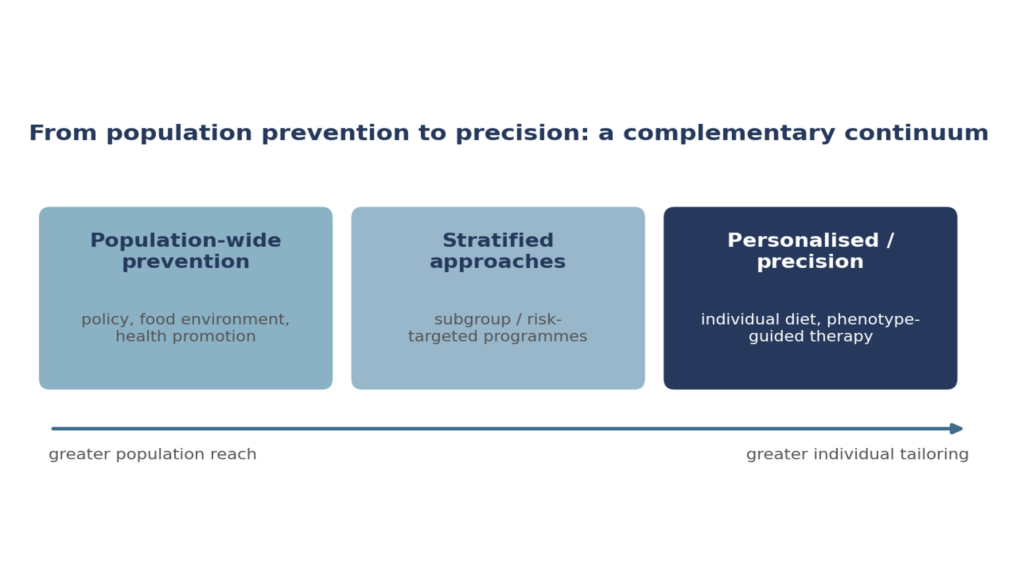
Figure 4. From population prevention to precision as a complementary continuum, trading population reach against individual tailoring.
The main risk is inequity: if precision tools are available only to the wealthy, they could widen the very disparities that public health seeks to close. Realising their promise at population scale will require affordability, robust evidence, workforce capacity, and careful attention to equity.
9. Remember!
Obesity is a global, multi-level public health problem whose scale continues to grow.1,2 Population prevention is indispensable but, on its own, has not reversed the trend. Personalised nutrition and precision medicine offer a way to account for the substantial variation between individuals in how they respond to food and to treatment,6,9 and early evidence is encouraging even where it is not yet conclusive. The most effective response is likely to combine strong population-level action with stratified and personalised strategies, applied equitably across the life course.
References
1. NCD Risk Factor Collaboration (NCD-RisC). Worldwide trends in underweight and obesity from 1990 to 2022: a pooled analysis of 3663 population-representative studies with 222 million children, adolescents, and adults. Lancet. 2024;403(10431):1027–50.
2. World Health Organization. Obesity and overweight [fact sheet]. Geneva: WHO; 2025. Available from: https://www.who.int/news-room/fact-sheets/detail/obesity-and-overweight
3. World Obesity Federation. World Obesity Atlas 2025. London: World Obesity Federation; 2025.
4. Simmonds M, Llewellyn A, Owen CG, Woolacott N. Predicting adult obesity from childhood obesity: a systematic review and meta-analysis. Obes Rev. 2016;17(2):95–107.
5. Zeevi D, Korem T, Zmora N, Israeli D, Rothschild D, Weinberger A, et al. Personalized nutrition by prediction of glycemic responses. Cell. 2015;163(5):1079–94.
6. Berry SE, Valdes AM, Drew DA, Asnicar F, Mazidi M, Wolf J, et al. Human postprandial responses to food and potential for precision nutrition. Nat Med. 2020;26(6):964–73.
7. Bermingham KM, Linenberg I, Polidori L, Asnicar F, Arrè A, Wolf J, et al. Effects of a personalized nutrition program on cardiometabolic health: a randomized controlled trial. Nat Med. 2024;30(7):1888–97.
8. Popp CJ, Hu L, Kharmats AY, Curran M, Berube L, Wang C, et al. Effect of a personalized diet to reduce postprandial glycemic response vs a low-fat diet on weight loss in adults with abnormal glucose metabolism and obesity: a randomized clinical trial. JAMA Netw Open. 2022;5(9):e2233760.
9. Acosta A, Camilleri M, Abu Dayyeh B, Calderon G, Gonzalez D, McRae A, et al. Selection of antiobesity medications based on phenotypes enhances weight loss: a pragmatic trial in an obesity clinic. Obesity (Silver Spring). 2021;29(4):662–71.
10. Wilding JPH, Batterham RL, Calanna S, Davies M, Van Gaal LF, Lingvay I, et al. Once-weekly semaglutide in adults with overweight or obesity. N Engl J Med. 2021;384(11):989–1002.
11. Jastreboff AM, Aronne LJ, Ahmad NN, Wharton S, Connery L, Alves B, et al. Tirzepatide once weekly for the treatment of obesity. N Engl J Med. 2022;387(3):205–16.