
Cardiovascular Diseases: Definition, Global Burden, and the Emerging Role of Personalised Nutrition and Precision Medicine
Synopsis
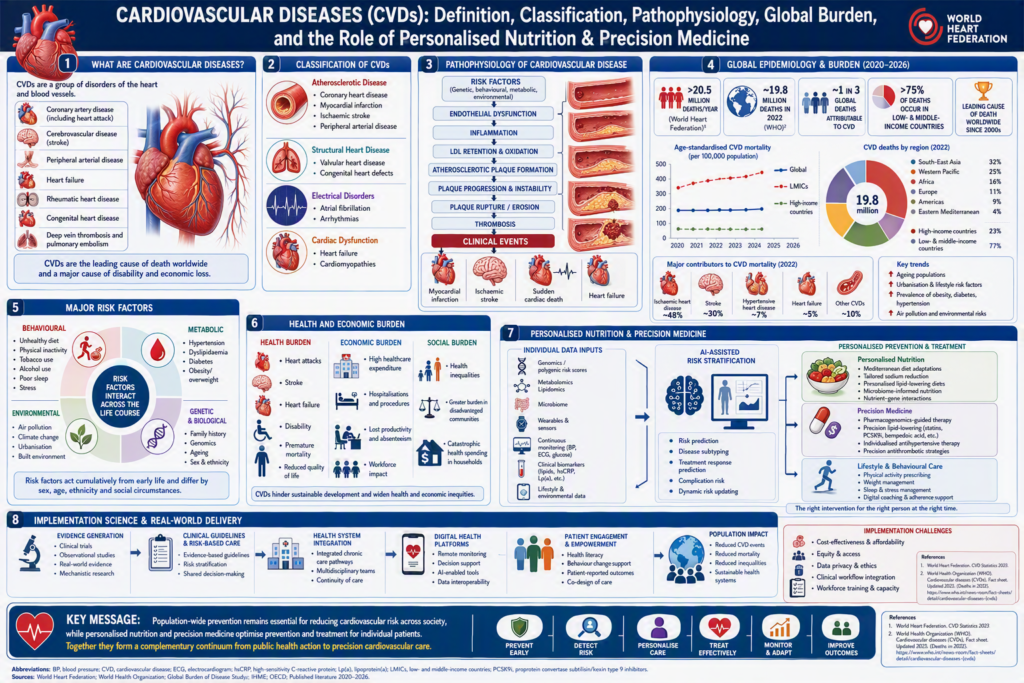
Cardiovascular diseases (CVDs) are a group of disorders of the heart and blood vessels and remain the leading cause of death worldwide. The World Heart Federation estimates that CVDs claim more than 20.5 million lives each year,1 and the World Health Organization (WHO) attributes about 19.8 million deaths in 2022, roughly one in three of all deaths, to CVDs, with more than three-quarters occurring in low- and middle-income countries.2 This overview, for readers in nutrition, public health, and implementation science, summarises the definition, classification, and pathophysiology of CVDs; their global epidemiology and burden using data from 2020–2026; and the developing role of personalised nutrition and precision medicine in preventing and managing the major CVDs, including mechanisms, evidence, and implementation considerations.
1. Definition, classification, and pathophysiology
1.1 Definition
Cardiovascular diseases are a family of conditions affecting the heart and the blood vessels that supply the heart, brain, and peripheral tissues. Most of the burden comes from atherosclerotic disease: coronary (ischaemic) heart disease and stroke together account for the large majority of CVD deaths.2 Because the major CVDs share behavioural and metabolic risk factors, they are often considered together for prevention, even though their clinical presentations differ. Up to 80% of premature CVD deaths are considered preventable through control of these risk factors.1
1.2 Classification
The principal categories of CVD are coronary (ischaemic) heart disease, which can present as stable angina, acute coronary syndromes, and myocardial infarction; cerebrovascular disease (stroke), comprising ischaemic stroke and haemorrhagic stroke (intracerebral and subarachnoid haemorrhage); heart failure, a common final pathway of many cardiac diseases; and hypertensive heart disease. Further categories include rheumatic heart disease, the cardiomyopathies, cardiac arrhythmias such as atrial fibrillation, peripheral arterial disease, congenital heart disease, and valvular and aortic disease (Table 1).3
These conditions differ greatly in frequency. Global estimates for 2023 put the number of people living with ischaemic heart disease at around 240 million, peripheral arterial disease at about 120 million, stroke at about 105 million, and atrial fibrillation at about 59 million; ischaemic heart disease is the single leading cause of cardiovascular disability-adjusted life years worldwide (Figure 2).3,4
Table 1. Classification of the major cardiovascular diseases, with dominant mechanism and principal risk factors.
| Category | Description | Main mechanism | Key risk factors |
| Coronary (ischaemic) heart disease | Stable angina, acute coronary syndromes, myocardial infarction | Atherosclerosis of coronary arteries; plaque rupture and thrombosis | LDL cholesterol, hypertension, smoking, diabetes |
| Stroke (cerebrovascular disease) | Ischaemic (majority) and haemorrhagic (intracerebral, subarachnoid) | Arterial occlusion or rupture reducing cerebral blood flow | Hypertension, atrial fibrillation, smoking, diabetes |
| Heart failure | Impaired filling or ejection; preserved (HFpEF) or reduced (HFrEF) ejection fraction | Common end stage of ischaemic, hypertensive and valvular disease | Prior MI, hypertension, diabetes, obesity |
| Hypertensive heart disease | Left-ventricular hypertrophy and heart failure from chronic high BP | Pressure overload from sustained hypertension | Uncontrolled hypertension |
| Rheumatic heart disease | Chronic valve damage after rheumatic fever | Autoimmune response to streptococcal infection | Untreated streptococcal infection, poverty, overcrowding |
| Cardiomyopathies | Diseases of heart muscle (dilated, hypertrophic and others) | Genetic, inflammatory, toxic or idiopathic myocardial disease | Genetic variants, alcohol, myocarditis |
| Atrial fibrillation and arrhythmias | Irregular or abnormal heart rhythm | Electrical remodelling; raises stroke and heart-failure risk | Ageing, hypertension, obesity, alcohol |
| Peripheral arterial disease | Atherosclerosis of limb arteries; claudication | Reduced perfusion of the limbs | Smoking, diabetes, hypertension, dyslipidaemia |
| Congenital and valvular disease | Structural defects present at birth or acquired valve disease | Developmental or degenerative structural abnormality | Genetic factors, ageing (calcific), rheumatic disease |
1.3 Pathophysiology
Atherosclerosis underlies most CVD. It begins with injury to the arterial endothelium from factors such as raised low-density lipoprotein cholesterol, high blood pressure, smoking, and hyperglycaemia; lipoproteins are retained and oxidised in the vessel wall, triggering a chronic inflammatory response, the formation of lipid-laden plaques, and progressive arterial narrowing. Rupture or erosion of a plaque exposes its contents and precipitates thrombosis, causing myocardial infarction or ischaemic stroke (Figure 1).2,5 Sustained hypertension drives hypertensive heart disease, haemorrhagic stroke, and heart failure, while shared metabolic risk factors accelerate the whole process. Heart failure represents the common end stage in which the heart can no longer meet the body’s circulatory demands.
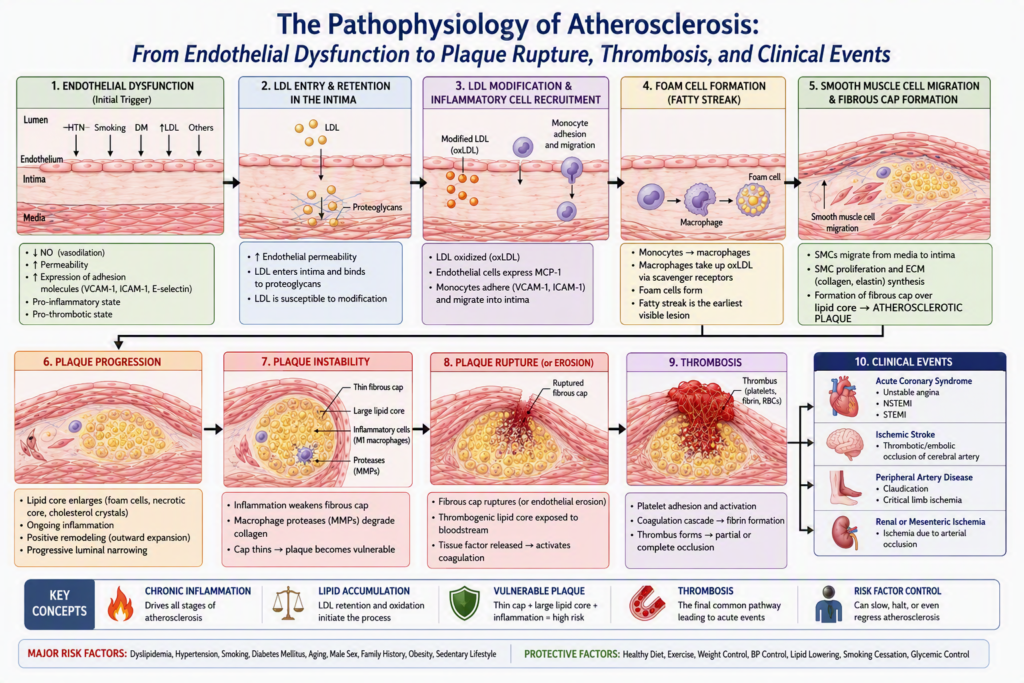
Figure 1. The pathophysiology of atherosclerosis, from endothelial dysfunction to plaque rupture, thrombosis, and clinical events.
Table 2. Major modifiable and non-modifiable risk factors for cardiovascular disease.
| Category | Risk factors |
| Behavioural | Tobacco use, unhealthy diet (excess salt, saturated and trans fats, added sugar), physical inactivity, harmful use of alcohol |
| Metabolic | Raised blood pressure, raised LDL cholesterol and dyslipidaemia, diabetes and raised blood glucose, overweight and obesity |
| Environmental | Ambient and household air pollution |
| Non-modifiable | Older age, male sex (earlier onset), family history and genetic susceptibility (including polygenic risk and lipoprotein(a)) |
2. Global epidemiology and burden
CVD is the world’s leading cause of death. The World Heart Federation estimates more than 20.5 million CVD deaths each year,1 and WHO attributes about 19.8 million deaths in 2022 (roughly 32% of all deaths) to CVD, of which about 85% are due to heart attack and stroke; CVDs also cause at least 38% of the 18 million premature (under-70) deaths from non-communicable diseases.2
The Global Burden of Disease programme provides the most detailed picture. Its 1990–2022 analysis showed that, although age-standardised CVD mortality fell by about 35% over that period through better prevention and treatment, the absolute number of deaths continued to rise with population growth and ageing; ischaemic heart disease carried the highest disability burden of any disease, and high systolic blood pressure was the single largest attributable risk.3 Regional age-standardised mortality varied roughly sixfold, from about 74 per 100,000 in high-income Asia Pacific to about 432 per 100,000 in Eastern Europe.3 The most recent update reported that the number of CVD deaths rose from 13.1 million in 1990 to 19.2 million in 2023, with about 437 million cardiovascular disability-adjusted life years, and that the highest age-standardised burden now falls on low and low-middle-income settings (Figure 2, Table 3).4
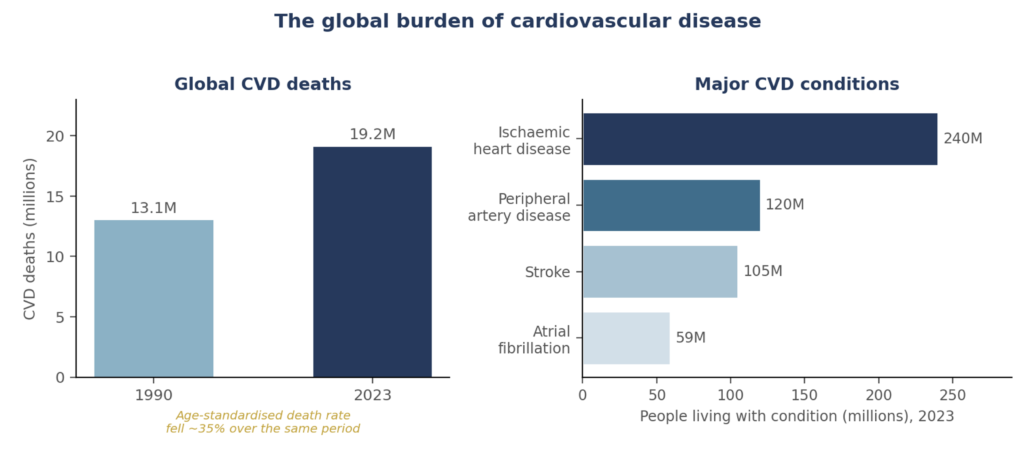
Figure 2. Global CVD deaths in 1990 and 2023, and the number of people living with the major CVD conditions in 2023.
The burden is therefore shifting toward LMICs even as rates fall in many high-income countries, a pattern driven by hypertension, tobacco use, unhealthy diet (including excess salt, sugar, and fats), physical inactivity, harmful alcohol use, obesity, and air pollution.2,5 This concentration of a largely preventable burden in poorer settings is the central public health challenge.
Table 3. Global burden of cardiovascular disease: key indicators, 2022–2023.
| Indicator | Estimate |
| Annual CVD deaths (World Heart Federation) | More than 20.5 million |
| CVD deaths, 2022 (WHO) | ~19.8 million (~32% of all deaths) |
| CVD deaths, 2023 (GBD) | 19.2 million (up from 13.1 million in 1990) |
| CVD disability-adjusted life years, 2023 (GBD) | ~437 million |
| Deaths due to heart attack and stroke | ~85% of CVD deaths |
| Leading cause of CVD disability | Ischaemic heart disease |
| Largest single attributable risk | High systolic blood pressure |
| Share of CVD deaths in low- and middle-income countries | More than three-quarters |
| Age-standardised mortality range (2022) | ~74 (high-income Asia Pacific) to ~432 (Eastern Europe) per 100,000 |
| People living with IHD / stroke / PAD / AF (2023) | ~240M / ~105M / ~120M / ~59M |
3. Personalised nutrition and precision medicine in cardiovascular disease
3.1 Rationale and mechanisms
CVD is the common endpoint of many risk factors acting on individuals who differ in genetic susceptibility, metabolism, and response to diet and drugs. Precision cardiology aims to use that heterogeneity, stratifying people by genomic, biomarker, imaging, and physiological data to target prevention and treatment more effectively (Figure 3). Personalised nutrition rests on a parallel finding to that seen in metabolic disease: people vary widely in their metabolic responses to the same foods, shaped by the gut microbiome, genetics, and meal context, and machine-learning models can predict individual responses better than generic advice.6,7
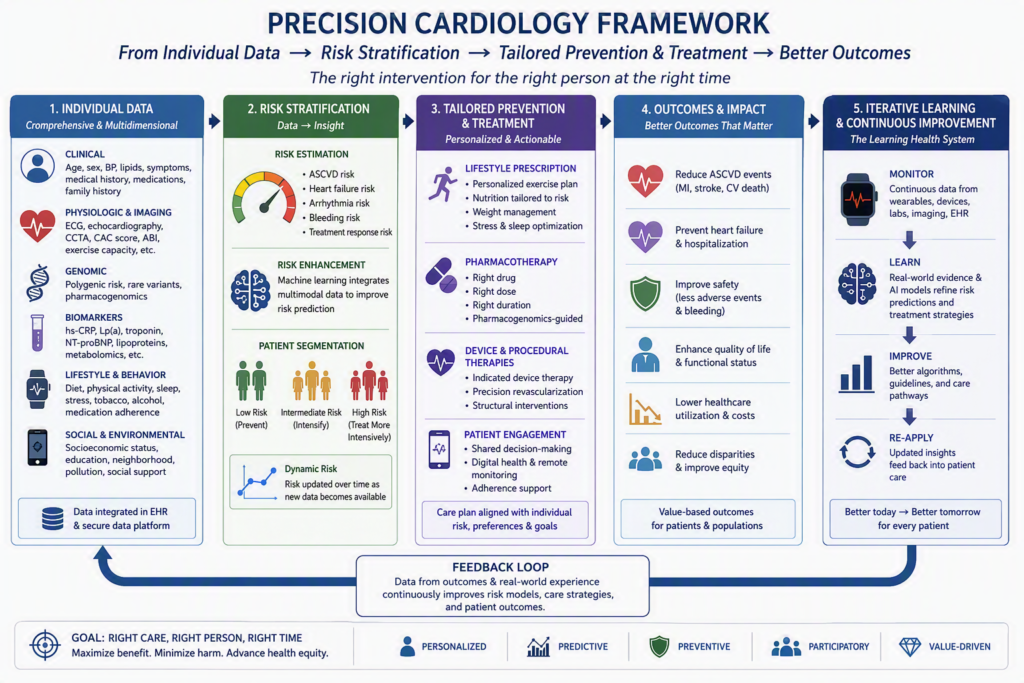
Figure 3. A precision cardiology framework, from individual data through risk stratification to tailored prevention and treatment, with an iterative feedback loop.
The mechanisms span several levels: dietary patterns that modify lipids, blood pressure, inflammation, and the microbiome; inherited variation that raises baseline risk; and drug responses that differ between individuals. Each offers a point of leverage for tailoring care.
3.2 Evidence in prevention and nutrition
Dietary pattern remains the strongest nutritional lever. In the PREDIMED trial, a Mediterranean diet supplemented with extra-virgin olive oil or nuts reduced major cardiovascular events by about 30% in people at high cardiovascular risk, compared with a lower-fat control diet.8 This is a whole-diet, population-relevant strategy rather than an individualised one, but it anchors current dietary guidance. Personalised nutrition seeks to go further by tailoring advice to the individual: studies using continuous glucose monitoring and multi-omic profiling have shown large person-to-person variation in postprandial responses,6,7 though evidence that such tailoring improves cardiovascular outcomes, as opposed to intermediate markers, is still developing (Table 4).
Genomics offers a complementary route to precision prevention. Genome-wide polygenic scores can identify the roughly 8% of the population whose inherited risk of coronary artery disease is three-fold or more above average, a group not captured by conventional risk factors,9 and a 2025 European clinical consensus statement has set out where such scores may add value and the requirements for their responsible clinical use, including the need for ancestry-diverse data.10
3.3 Evidence in management
Precision is also entering treatment. Lipid-lowering can be intensified according to individual risk using statins, ezetimibe, and PCSK9 inhibitors, and lipoprotein(a) is emerging as a genetically determined, targetable risk marker. Among people with overweight or obesity and established cardiovascular disease but without diabetes, the SELECT trial found that the GLP-1 receptor agonist semaglutide reduced major adverse cardiovascular events by about 20%, extending cardiometabolic therapy to a large at-risk group.11 In heart failure and stroke, management is increasingly phenotype- and mechanism-based, for example distinguishing heart failure with preserved from reduced ejection fraction, and tailoring stroke prevention to its cause.
Table 4. Selected evidence on personalised nutrition and precision medicine in cardiovascular disease.
| Study | Design and population | Key finding |
| PREDIMED (Estruch 2018) | RCT, ~7,447 adults at high cardiovascular risk, Spain | Mediterranean diet with extra-virgin olive oil or nuts cut major CV events by ~30% vs a low-fat control |
| PREDICT 1 (Berry 2020) | n=1,002 adults; standardised test meals | Large person-to-person variation in postprandial glucose (68%) and triglyceride (103%) responses to identical meals |
| Polygenic score (Khera 2018) | UK Biobank, ~288,978 adults | Genome-wide score identified ~8% of people at three-fold or greater coronary risk from genetics alone |
| ESC consensus (2025) | Clinical consensus statement | Set out the clinical utility of, and requirements for, polygenic risk scores, including ancestry-diverse data |
| SELECT (Lincoff 2023) | RCT, ~17,600 adults with overweight/obesity and established CVD, no diabetes | Semaglutide reduced major adverse cardiovascular events by ~20% |
3.4 Implementation considerations
Translating these approaches into public health practice raises real challenges. Polygenic scores and multi-omic tools require data infrastructure, analytic capacity, and validation across diverse ancestries, and most have been developed in high-income, predominantly European-ancestry populations.10 Because more than three-quarters of the CVD burden falls in LMICs,2 precision tools confined to wealthy settings risk widening inequities rather than narrowing them.
An implementation-science lens is therefore essential, weighing reach, adoption, fidelity, cost, and scalability, and asking whether a precision strategy can be delivered within existing services. The highest-yield actions remain population-level: reducing dietary salt, controlling tobacco and air pollution, and improving detection and treatment of hypertension and dyslipidaemia. The most credible model is precision within a strong population approach, not instead of it, with stratified and personalised strategies layered on for those who stand to benefit most (Figure 4). For the nutrition and public health workforce, the near-term priority is to translate dietary-pattern evidence and emerging personalised-nutrition science into feasible, affordable, and culturally appropriate advice.
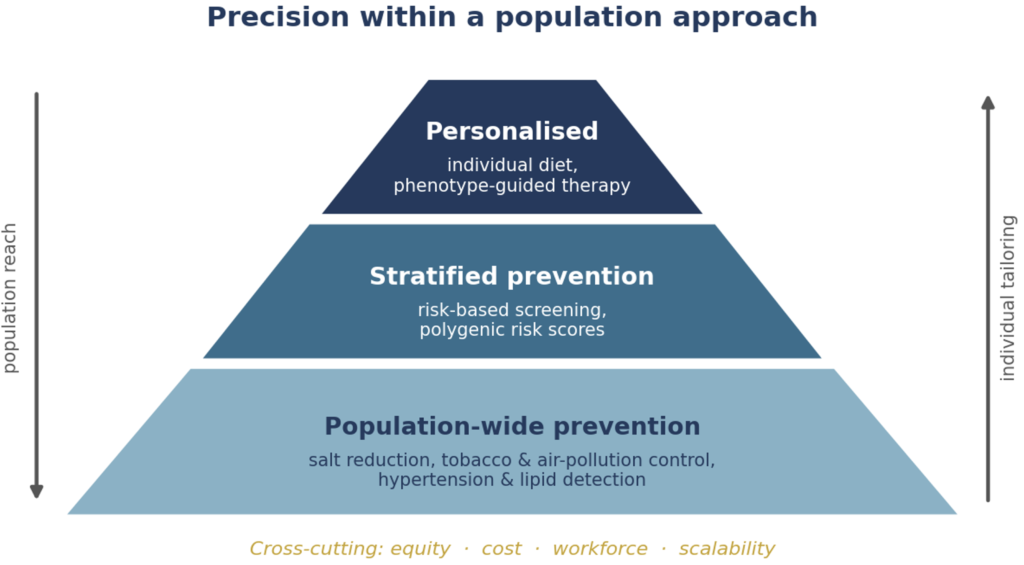
Figure 4. Precision within a population approach: personalised and stratified strategies layered on a foundation of population-wide prevention.
4. Remember!
Cardiovascular disease remains the leading cause of death worldwide, and although age-standardised rates are falling, the absolute burden is rising and shifting toward low- and middle-income countries.1,4 Precision medicine and personalised nutrition offer routes to more effective, individualised prevention and care, from Mediterranean dietary patterns and polygenic risk stratification to cardiometabolic pharmacotherapy;8,9,11 yet most personalised-nutrition applications remain at an emerging stage, and the tools of precision cardiology raise pressing questions of equity and access. Their public health value will depend on careful implementation alongside the population-level measures that continue to offer the greatest and most equitable returns.2
References
1. World Heart Federation. World Heart Report 2025: obesity and cardiovascular disease. Geneva: World Heart Federation; 2025.
2. World Health Organization. Cardiovascular diseases (CVDs) [fact sheet]. Geneva: World Health Organization; 2025. Available from: https://www.who.int/news-room/fact-sheets/detail/cardiovascular-diseases-(cvds)
3. Mensah GA, Fuster V, Murray CJL, Roth GA; Global Burden of Cardiovascular Diseases and Risks Collaborators. Global burden of cardiovascular diseases and risks, 1990–2022. J Am Coll Cardiol. 2023;82(25):2350–473.
4. Global Burden of Cardiovascular Diseases and Risk Factors Collaboration. Global, regional, and national burden of cardiovascular diseases and risk factors in 204 countries and territories, 1990–2023. J Am Coll Cardiol. 2025. doi:10.1016/j.jacc.2025.08.015.
5. Visseren FLJ, Mach F, Smulders YM, Carballo D, Koskinas KC, Bäck M, et al. 2021 ESC Guidelines on cardiovascular disease prevention in clinical practice. Eur Heart J. 2021;42(34):3227–337.
6. Berry SE, Valdes AM, Drew DA, Asnicar F, Mazidi M, Wolf J, et al. Human postprandial responses to food and potential for precision nutrition. Nat Med. 2020;26(6):964–73.
7. Zeevi D, Korem T, Zmora N, Israeli D, Rothschild D, Weinberger A, et al. Personalized nutrition by prediction of glycemic responses. Cell. 2015;163(5):1079–94.
8. Estruch R, Ros E, Salas-Salvadó J, Covas MI, Corella D, Arós F, et al; PREDIMED Study Investigators. Primary prevention of cardiovascular disease with a Mediterranean diet supplemented with extra-virgin olive oil or nuts. N Engl J Med. 2018;378(25):e34.
9. Khera AV, Chaffin M, Aragam KG, Haas ME, Roselli C, Choi SH, et al. Genome-wide polygenic scores for common diseases identify individuals with risk equivalent to monogenic mutations. Nat Genet. 2018;50(9):1219–24.
10. ESC Council on Cardiovascular Genomics, ESC Cardiovascular Risk Collaboration, European Association of Preventive Cardiology. Clinical utility and implementation of polygenic risk scores for predicting cardiovascular disease: a clinical consensus statement. Eur Heart J. 2025;46(15):1372–83.
11. Lincoff AM, Brown-Frandsen K, Colhoun HM, Deanfield J, Emerson SS, Esbjerg S, et al; SELECT Trial Investigators. Semaglutide and cardiovascular outcomes in obesity without diabetes. N Engl J Med. 2023;389(24):2221–32.